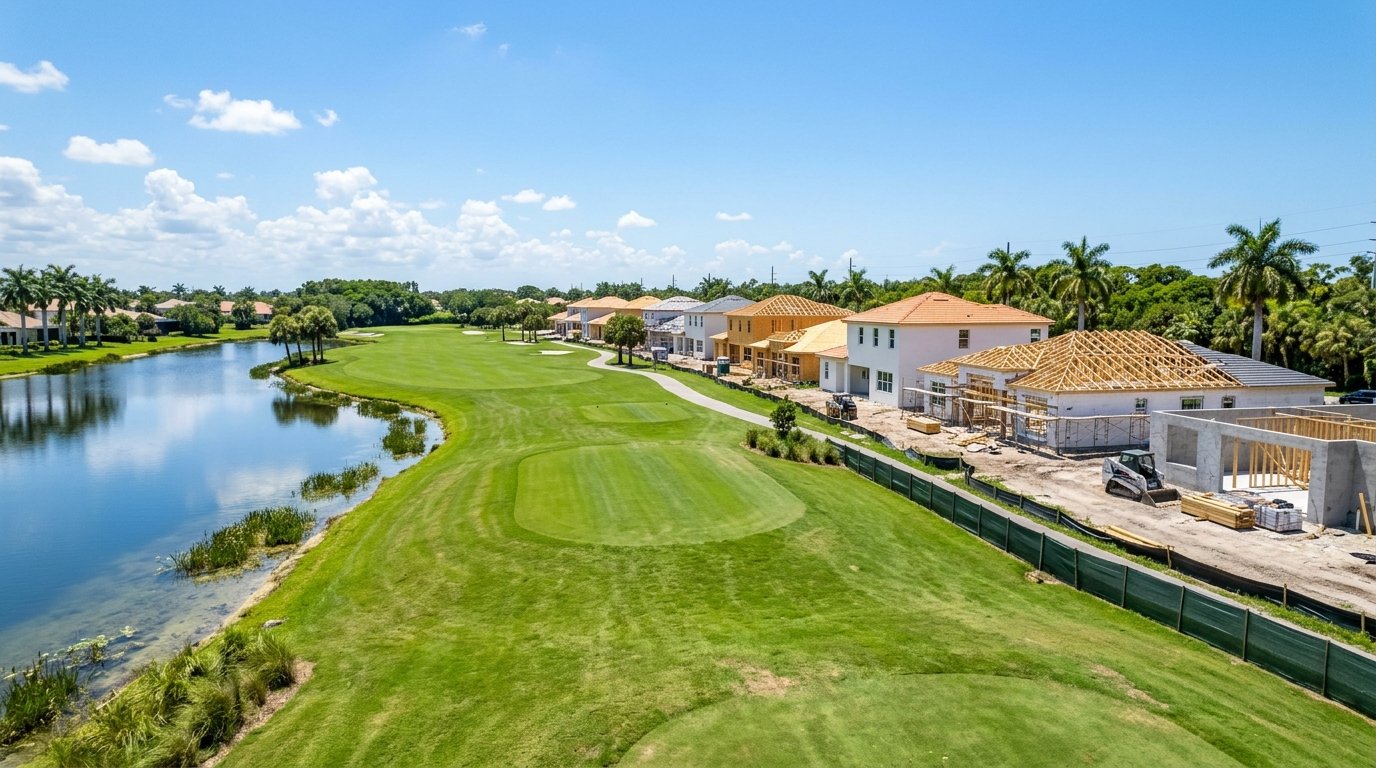
Florida's new Infill Redevelopment Act is already reshaping the conversation about golf courses in the western communities. In Wellington, the new owner of the shuttered Polo West course is exploring luxury homes. Next door in Royal Palm Beach, a developer has met with village staff about redeveloping the 174-acre Village Golf Club, and neighbors are pushing back. The law can let qualifying projects skip public hearings. Supporters say it unlocks badly needed housing on underused land. Critics say it takes the decision away from the people who live there.
The infill law at a glance
- The law
- The Infill Redevelopment Act (SB 1434), signed May 21, 2026
- Where it applies
- Miami-Dade, Broward and Palm Beach counties
- Golf courses
- Closed courses surrounded by homes can qualify after at least 12 straight months out of operation
- Approval
- Qualifying projects are approved administratively, without commission votes or public hearings
- Local examples
- Polo West in Wellington (about 150 acres) and the Village Golf Club in Royal Palm Beach (174 acres)
How the law works
According to a summary by the law firm Holland & Knight, the law covers certain parcels of at least 5 acres next to residential zoning, including contaminated sites and closed recreation sites such as golf courses. For qualifying projects:
- Approval is administrative, "without commission votes or public hearings."
- Density is capped at the lower of the average density of the neighboring residential zoning or 25 homes per acre.
- Projects next to single-family homes need a buffer of at least 20 feet kept as open space.
- For closed recreation sites, adjacent owners get 90 days to buy the land and keep it as open space, and a developer that moves forward pays double the parks impact fee.
In Wellington: Polo West
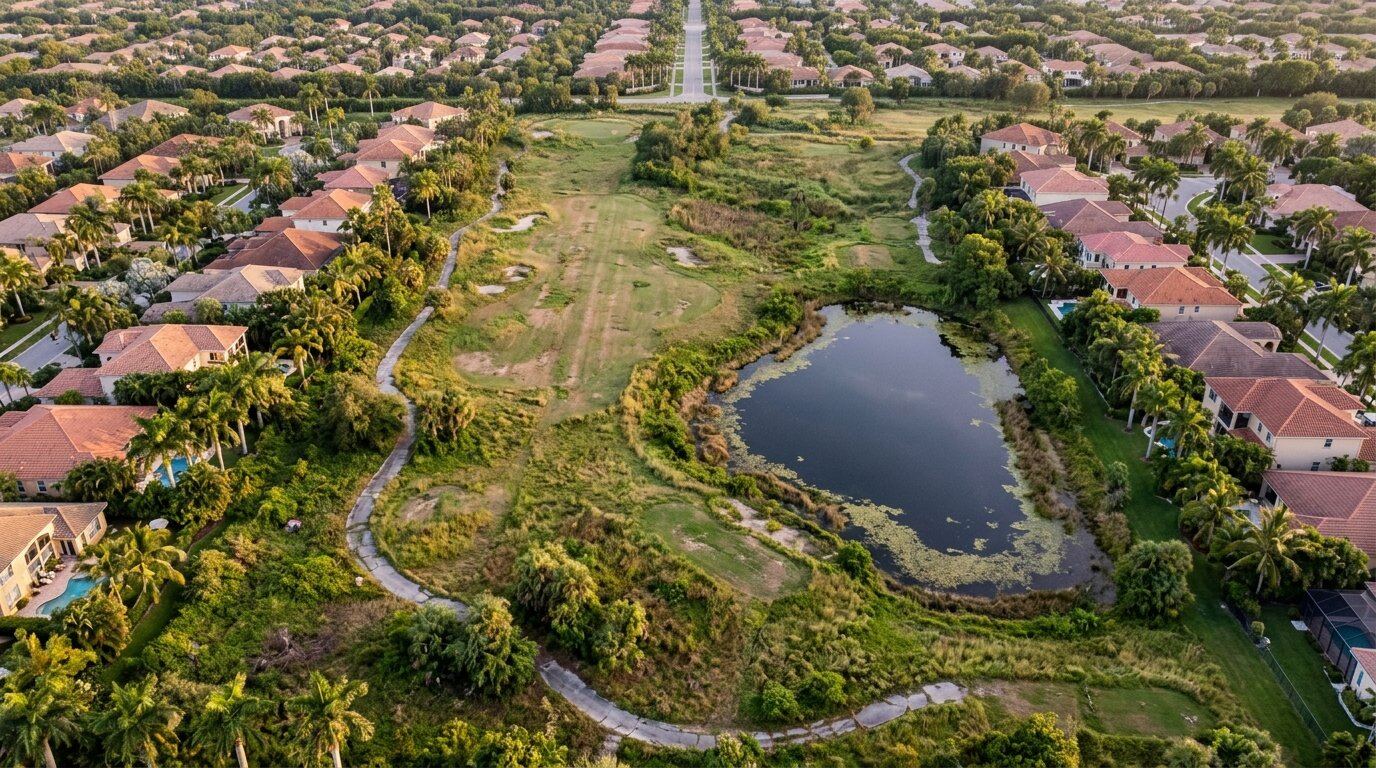
Miami-based BH Group bought the long-shuttered Polo West Golf Course off South Shore Blvd. for $20.8 million and has said it plans a luxury single-family community. It has given the Village documentation on how it says the site qualifies under the new law, the Town-Crier reported in July. Village Manager Jim Barnes called it "one of the most significant redevelopment opportunities in Wellington in many years." Read our full breakdown: Could Polo West become homes?
Next door: Royal Palm Beach's Village Golf Club
Royal Palm Beach staff recently met with developer 13th Floor Homes about redeveloping the Village Golf Club using the same law, the Town-Crier reported in October. Unlike Polo West, the Village Golf Club is still used for recreation, and the law requires a course to be out of operation for at least a year, so it's unclear how a project there would qualify. 13th Floor proposed 450 homes on part of the site in 2018, a plan that drew a packed council meeting of opponents and never moved forward. Neighbors have started a petition to save the green space.
The case for the law
- A housing shortage. The bill as filed states that "this state's urban areas lack sufficient land for the development of additional residential uses" and that land in or near urban areas is difficult to develop or redevelop.
- Fixing neglected land. Closed courses like Polo West have sat largely unused for years. Barnes noted that, unlike building on undeveloped land, redeveloping it means "productive use of existing infrastructure."
- Built-in protections. The required buffers, the neighbors' 90-day option to buy the land, and double parks fees are meant to soften the impact on surrounding homes.
- Faster, predictable approvals. The Legislature found that expedited permitting for these parcels serves the public interest in cleaning up land and increasing housing.
The case against
- No public hearings. "[The state's] decision that Palm Beach, Broward and Miami-Dade counties do not need open, successful golf courses, with no public hearings, is inconsistent with everything that I was to understand with development in Florida," Royal Palm Beach Village Manager Ray Liggins said.
- Traffic and infrastructure. Royal Palm Beach Mayor Jeff Hmara warned that more cars would worsen traffic, especially on Okeechobee Blvd. "Development is a serious, serious problem, to which I don't know there's significant mitigation available," he said.
- Losing green space. Neighbors who bought homes for the golf course views worry that once open space is gone, it's gone for good.
- Local leaders' hands are tied. "We do not see this as desirable. At the end of the day, the Infill Redevelopment Act is the law," Hmara said. "We all will have to comply with it, but we'll do our very best to make sure that the concerns of our citizens are addressed."
What to watch
As of the latest Town-Crier reports, neither project had gone through a public approval step. In Wellington, Village staff will review any Polo West filing under the law's standards. In Royal Palm Beach, the open question is whether a course still in use can qualify at all. For another state law changing what gets built locally, see how the Live Local Act is bringing apartments to Wellington.
What do you think?
Is turning closed golf courses into homes a smart way to ease South Florida's housing crunch, or should neighbors always get a public hearing before their green space changes? For more on development out west, see the data center moratorium and Project Tango.
Frequently asked questions
Can golf courses in Palm Beach County be turned into homes?
Under Florida's 2026 Infill Redevelopment Act, closed golf courses surrounded by homes in Miami-Dade, Broward and Palm Beach counties can qualify for residential redevelopment after being out of operation for at least 12 straight months, with administrative approval and no public hearings.
Which local golf courses could be affected?
The Town-Crier has reported on two: the shuttered Polo West Golf Course in Wellington, whose new owner BH Group is exploring luxury homes, and the Village Golf Club in Royal Palm Beach, where developer 13th Floor Homes met with village staff.
Do neighbors get any say under the Infill Redevelopment Act?
There are no public hearings for qualifying projects, but for closed recreation sites, adjacent owners get 90 days to buy the land and keep it as open space, and projects next to single-family homes need at least a 20-foot open-space buffer.
Sources
- Town-Crier: New State Law Could Bring Homes To RPB Golf Course (Oct. 16, 2026)
- Town-Crier: New State Law Could Bring Homes To Polo West Land (July 24, 2026)
- Holland & Knight: Florida's Infill Redevelopment Act: What South Florida Developers Need to Know (July 2026)
- Florida Senate: SB 1434 (2026), bill text
Details on developments and schools can change. We update this guide as new information is announced. Spot something out of date? Send us a tip.
Keep reading
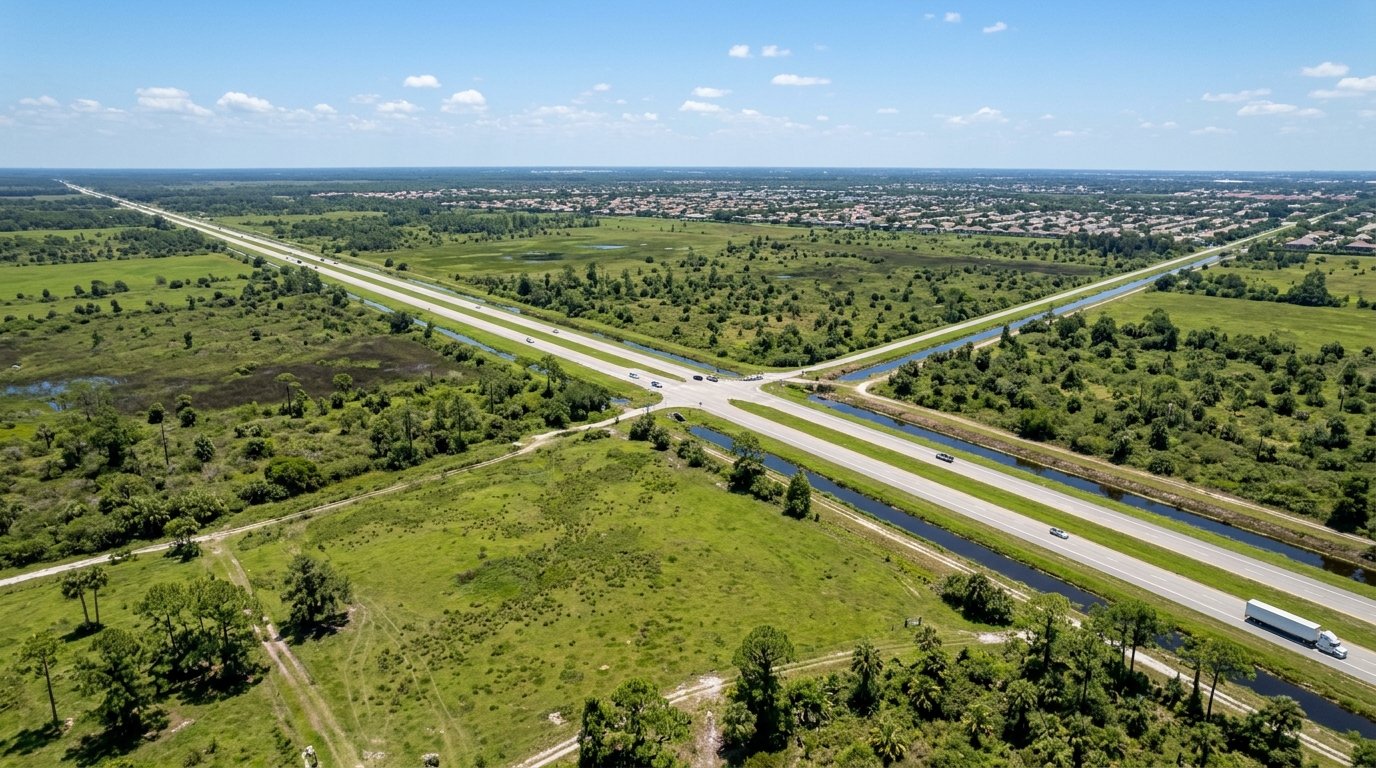
Wellington and the County Reach a Narrower Deal on Artistry Lakes
Wellington and Palm Beach County negotiated a narrower boundary agreement covering only Artistry Lakes, dropping Arden. What's in the deal, the housing money, and the concerns that shaped it.
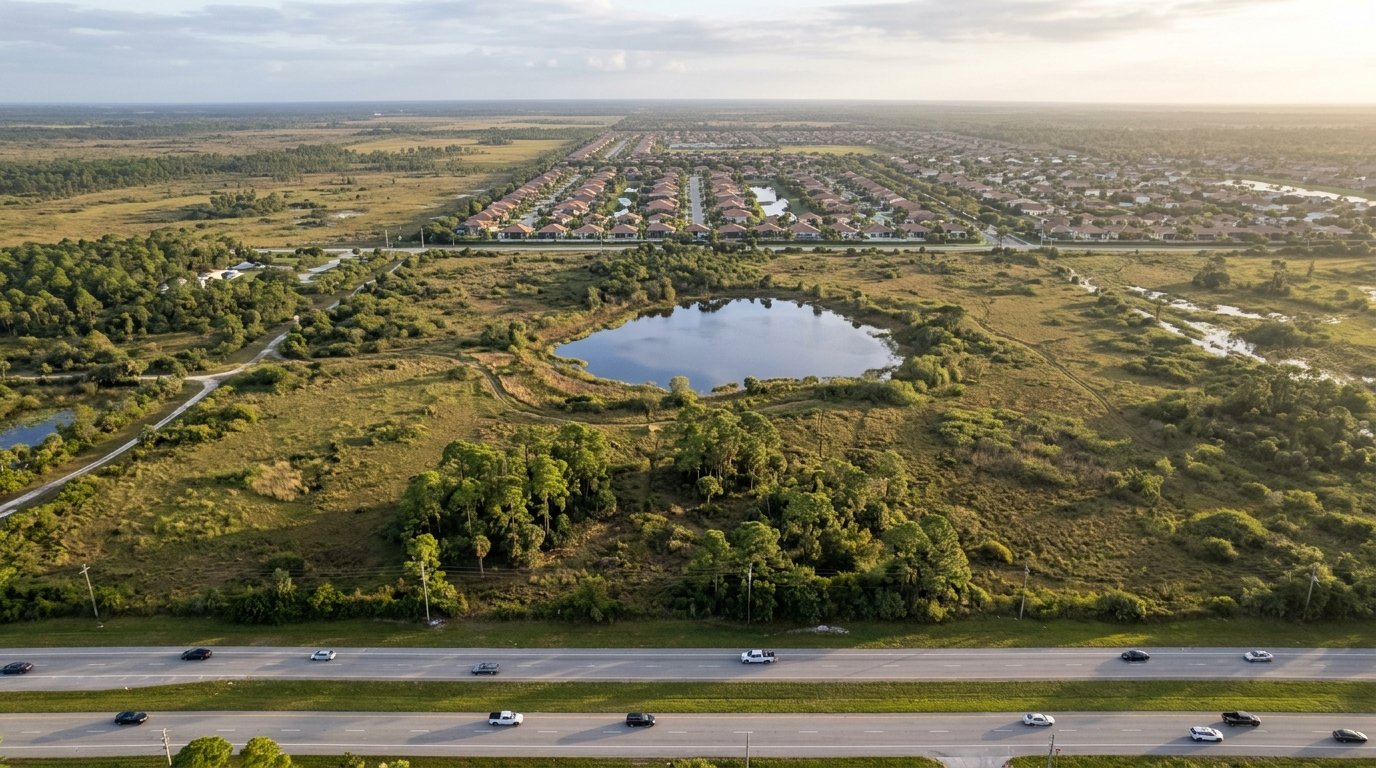
Artistry Lakes: Wellington and the County Clash Over a 446-Acre Annexation
Wellington annexed the 446-acre Artistry Lakes site on Southern Blvd., where Kolter Homes plans 579 homes. Palm Beach County objects and rejected a settlement. What happened, both sides, and what's next.
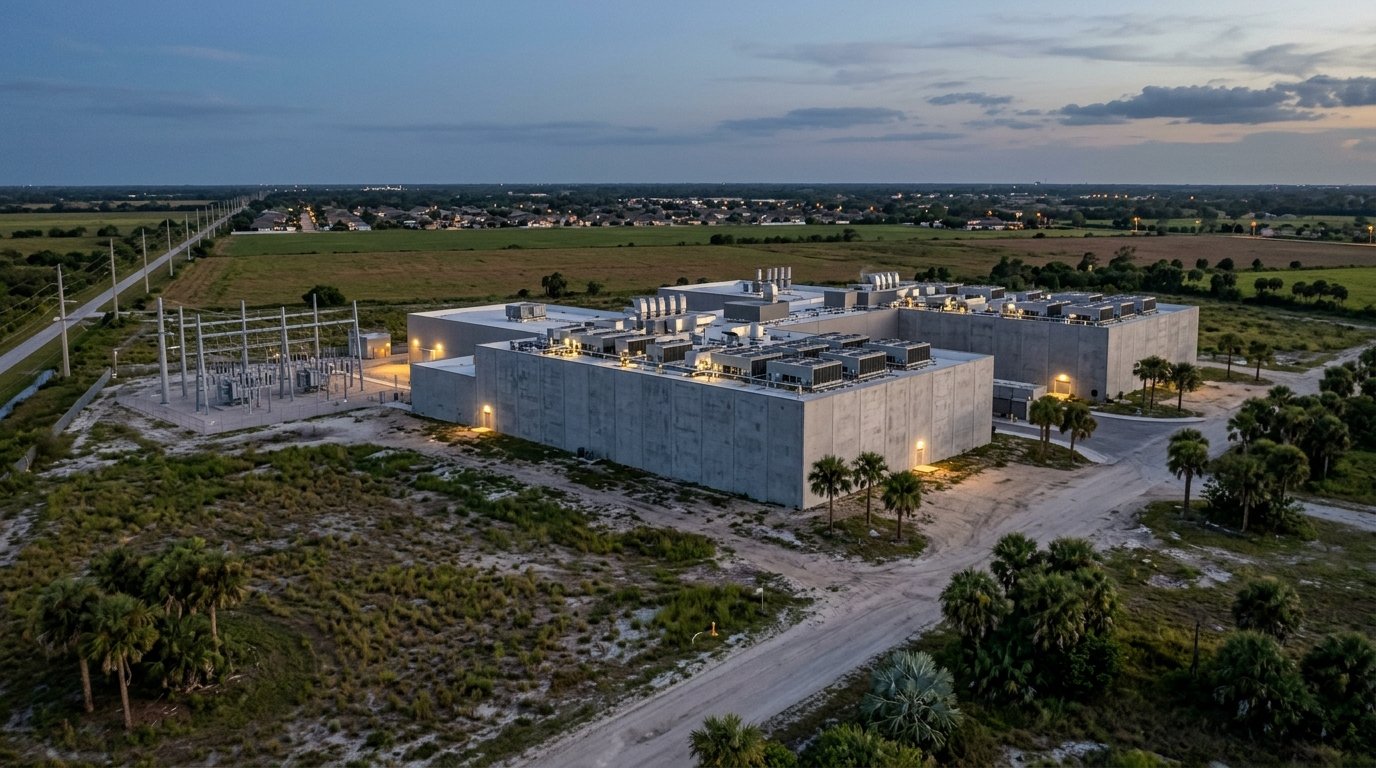
Data Centers Near Wellington? Palm Beach County's Moratorium Explained
Palm Beach County approved a one-year moratorium on large AI data centers after the Project Tango fight near 20-Mile Bend and Arden. What it covers, what's still possible on the Tango site, and both sides.
Could Polo West Become Homes? What a New State Law Means
BH Group bought Wellington's shuttered 150-acre Polo West Golf Course and plans luxury homes. How Florida's Infill Redevelopment Act could skip public hearings, and both sides of the debate.
Affordable Apartments Are Coming to Wellington Under the Live Local Act
Wellington's first Live Local Act apartments are planned on Van Gogh Road and Velazquez Blvd near Southern and Seminole Pratt, with rents of about $1,249 to $2,310. How the state law works and the fee-waiver debate.
K-Park Becomes Village Landing: Did Wellington Make the Right Call?
Wellington sold K-Park for about $47 million to Related Ross and Wingrove Academy's founders, passing on a $54 million offer. The history, the debate over green space and traffic, and what's next.