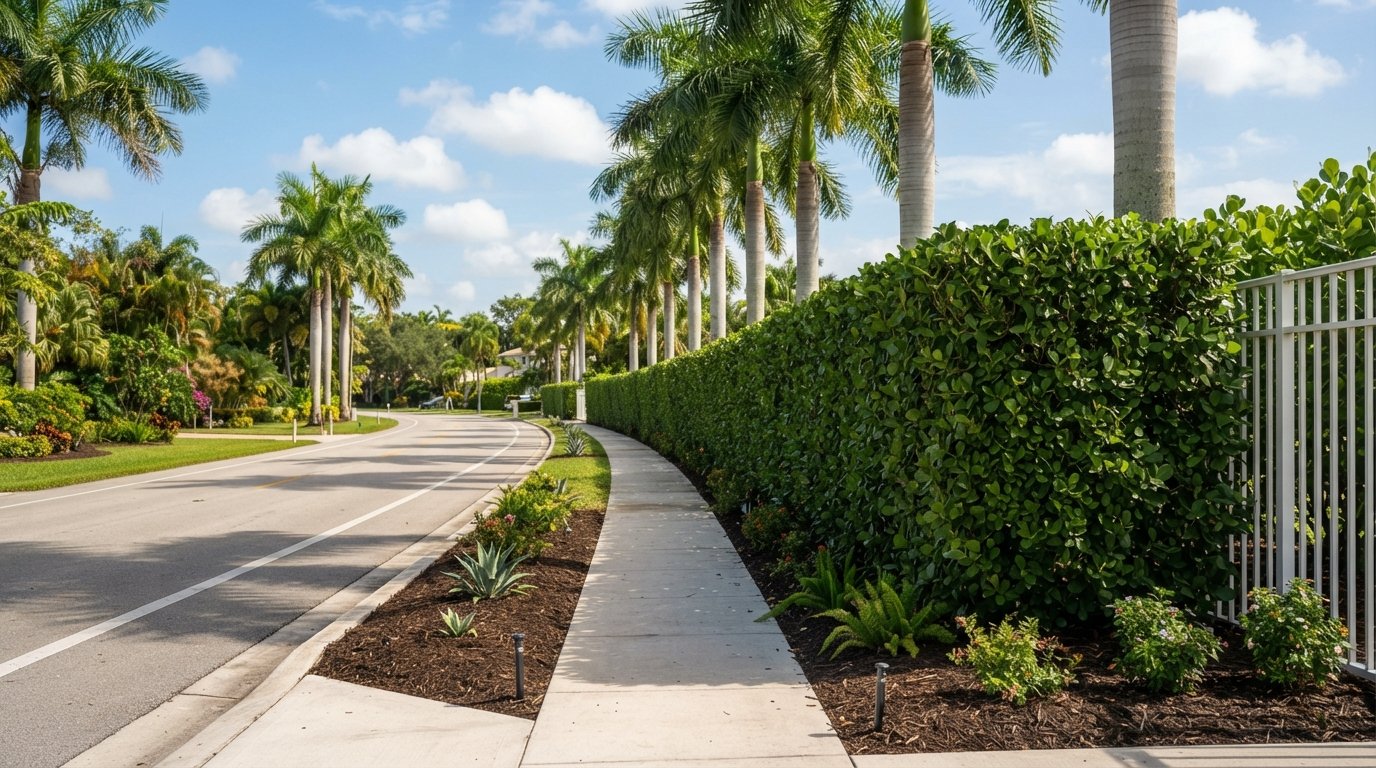
If your home in Wellington, Florida backs up to a major road like Forest Hill Boulevard or Wellington Trace, a deadline is close: under the village's hedge and fence rules, non-conforming hedges along major thoroughfares must be replaced by Dec. 31, 2026. Here's what the rules require, which five hedge plants are approved, how fences must look, and how Wellington's code compliance process works, from a courtesy notice to fines and liens. We also cover parking, landscaping and other common violations.
Wellington hedge and code rules at a glance
- Hedge deadline
- Non-conforming hedges replaced by Dec. 31, 2026
- Approved hedges
- Cocoplum, Green Arboricola, Podocarpus, Clusia, Simpson Stopper
- Hedge height on major roads
- 6 to 8 feet (Ordinance 2024-02)
- Fence setback
- At least 3 feet from the property line or roadway easement next to a sidewalk or right-of-way
- Parking ticket
- $35; handicap space $250
- Max daily fine
- Up to $250 a day per violation, set by the Special Magistrate
- Code Compliance
- (561) 753-2560 or SeeClickFix
Rules are from the Village of Wellington's Guidelines for Fences and Walls, Code Compliance, Parking Regulation, Animal Complaints and FAQ pages (Code Compliance, Hedges and Fences, and Landscape Regulations), checked Nov. 19, 2026. The village's code of ordinances and Land Development Regulations are the final word, and HOA rules may be stricter.
The Dec. 31, 2026 hedge deadline
Wellington adopted its Hedges and Fences Ordinance (No. 2021-18) in October 2021 to create a uniform look along village thoroughfares. On July 16, 2024, the council adopted Ordinance 2024-02, which updated hedge heights, fence setbacks and hedge materials after residents raised concerns.
The village's fence and wall guidelines say all legal non-conforming hedges must be replaced by Dec. 31, 2026 with one of the five required hedge materials. That includes properties that back up to a major thoroughfare and don't have a fence or hedge at all.
Who's affected: properties whose rear or side property lines abut a major thoroughfare. The village's landscape FAQ lists Forest Hill Boulevard, Wellington Trace, Big Blue Trace, Birkdale Drive and Greenview Shores Boulevard among those roads; the full list is on Wellington's Major Thoroughfare Map (Figure 2 in Article 9 of the Land Development Regulations).
The five approved hedge plants
| Hedge plant | Why the village chose it |
|---|---|
| Cocoplum | On Wellington's approved hedge list since before incorporation |
| Green Arboricola | On the approved list since before incorporation |
| Podocarpus | On the approved list since before incorporation |
| Clusia | Popular in Wellington, especially the Equestrian Preserve Area, for its height and width |
| Simpson Stopper | A native plant and an alternative to ficus |
Hedge rules under Ordinance 2024-02
- Height: hedges next to a major thoroughfare must be kept between 6 and 8 feet tall. Elsewhere, a hedge along a fence or wall must be at least as tall as the fence or wall.
- Planting: 2 feet on center, at least 36 inches tall when planted. New hedges get two years to reach the required height.
- Replace, don't patch: a hedge that's more than 30% dead, deteriorated or diseased, or that shows more than 18 inches of bare trunk at the base, must be fully replaced with an approved plant.
- Irrigation and mulch: hedges along fences and walls need working irrigation, and the landscape bed along the thoroughfare must be mulched at all times.
- Placement: fences, walls and hedges can't sit closer than 5 feet back from the front plane of the house on either side, unless the Planning, Zoning and Building Director allows it for things like A/C or pool equipment.
A note on older numbers: some of the village's FAQ answers still describe the original 2021 rules (an 8-foot hedge, planted 3 feet apart, with three years to grow in). The fence and wall guidelines page reflects the 2024 update, so check with Planning and Zoning at (561) 791-4000 if you see conflicting numbers.
Want to keep your existing hedge?
If your hedge isn't one of the five approved plants but is healthy and well kept, you can apply to the Architectural Review Board for an alternative material approval (the village has an Existing Hedge Material Waiver application). The village says code officers would focus on fence setbacks first, with hedge height and materials enforced over time.
Fence and wall rules
- Setback: at least 3 feet from the property line, or from the roadway easement when next to a sidewalk or public right-of-way, to leave room for the hedge.
- Hedge required: fences that face a road need a hedge on the outside, except where a gate is (and some fence types in the Equestrian Preserve Area).
- Finished side out: the finished side of a fence or wall must face the street or the neighbor.
- Privacy mesh: black, green or brown mesh is allowed on chain link or aluminum fences while the hedge grows in, but must come down within 30 days after the hedge reaches fence height.
- Upkeep: fences can't lean or be held up by hedges. Clean or repaint when 10% or more of the surface is stained or 5% or more of the paint is peeling.
- Repairs: a building permit is needed when damage exceeds 20% of a fence or wall section, and replacing more than 30% means the new work must meet current rules. See our building permits guide, including which small fence jobs may qualify for the new HB 803 exemption.
Approved fence types and colors
| Fence type | Allowed styles and colors |
|---|---|
| Wood | Shadow box or board-on-board; natural, clear-coat, or painted beige, gray or white (black, gray or white in the Equestrian Preserve Area and along major roads) |
| Vinyl | Vinyl Estate Board; beige, brown or gray |
| Vinyl-coated chain link | Black, green or brown; hedge required around the entire fence, outside when next to a right-of-way |
| Aluminum railing | 2, 3 or 4 rail; black, bronze or white |
Walls must be masonry, concrete or brick, smooth-finished on both sides and painted in a non-glossy color matching nearby subdivision walls or the Architectural Review Board's color chart.
Landscaping basics
According to the village's landscape FAQ:
- Every property needs landscaping, including shade trees, shrubs along the front and foundation, groundcover and grass. A bare front yard doesn't meet the minimum.
- Most plants must be in the ground; only limited decorative pots count.
- You may trim up to 25% of a tree or palm. Removing one requires a Tree/Vegetation Removal permit, including fruit trees.
- You can trim a neighbor's branches that hang over your property line; the village suggests talking with your neighbor first.
- Trash bins and mechanical equipment visible from the street must be screened. See our trash and recycling guide for cart rules.
Need help meeting the deadline? Browse local landscaping and tree service companies.
Parking rules and tickets
Wellington code officers and Palm Beach County Sheriff's deputies no longer have to issue a warning first. The village prohibits:
- Parking in a swale, on the street, or over most of a sidewalk
- Overnight parking of a commercial vehicle not fully screened in a garage or behind walls and hedges
- Recreational vehicles that aren't adequately screened (the code also regulates boats and trailers)
Tickets are $35, or $250 for a handicap space. With three or more unpaid regular tickets, or one unpaid handicap ticket, the state won't renew your vehicle registration. The village says swale parking damages drainage and can cause standing water, potholes and driveway cracks. Hosting a party? Call (561) 753-2560 ahead of time to arrange event parking without tickets.
Barking dogs and leash rules
Animal complaints in Wellington go to Palm Beach County Animal Care and Control at (561) 233-1200, not the village. County law requires dogs to be leashed or otherwise restrained off the owner's property, except in designated off-leash areas. For nuisance complaints such as habitual barking, the county investigates after receiving sworn affidavits from two unrelated residents in separate nearby homes. Cruelty and neglect can be reported anonymously. More in our dog-friendly Wellington guide.
How code enforcement works
- How cases start: citizen complaints come first, and officers also run proactive Neighborhood Improvement Inspections. The village says about 75% to 80% of cases come from those proactive inspections.
- No anonymous complaints: since a 2021 state law (Senate Bill 60), you must give your name and address to file a complaint, unless the violation is an imminent threat to health or safety or to sensitive habitat. Complaints are public records.
- Inspections: officers can't enter your property without permission; they inspect from the street, an easement or, with permission, a neighbor's property.
- Courtesy notice: usually a letter or door hanger giving you 3 to 30 days to fix the problem. It's a courtesy, not a requirement, and can be skipped for safety issues or repeat violations.
- Special Magistrate: if the violation isn't fixed, the case goes to a hearing. The magistrate can impose fines of up to $250 a day per violation, plus case costs typically $175 to $600.
- Liens: unpaid fines become a lien on every property the owner has in Palm Beach County. Liens unpaid for 3 months can be foreclosed, except on homestead property.
- Appeals go to Circuit Court within 30 days, not the Village Council.
Got a notice? The village's advice is to act quickly and call your code officer, especially if you need more time. In most cases, it says, extensions are given when circumstances warrant. Look up your officer on the village's Code Compliance Zone Map, and keep your case number handy.
Two views on stricter rules
Supporters say consistent hedges, fences and landscaping protect Wellington's look and property values, and the village says its goal is compliance, not penalties. On the other side, replacing an established hedge can be a real expense, and residents raised concerns about hedge height, fence setbacks and hedge materials under the original 2021 rules; the village says that's why the council adopted the 2024 revision. There's also an alternative-material option. If cost is a concern, ask the Architectural Review Board about keeping your hedge before you tear it out.
More Wellington how-to guides
- How to get a building permit in Wellington
- Trash, recycling and bulk pickup
- Wellington water guide and lawn watering rules
What do you think?
Is your home on a major road affected by the hedge deadline? Do you think Wellington's hedge and fence rules strike the right balance between a uniform look and homeowner costs? Share your thoughts with neighbors.
Frequently asked questions
What is Wellington's hedge deadline?
Under Wellington's hedge and fence rules, legal non-conforming hedges along major thoroughfares must be replaced with one of five approved hedge plants by Dec. 31, 2026, including on properties that back up to a major road without a fence or hedge.
Which hedges are approved in Wellington, FL?
The five required hedge materials along thoroughfares are Cocoplum, Green Arboricola, Podocarpus, Clusia and Simpson Stopper. Owners of healthy non-conforming hedges can apply to the Architectural Review Board for alternative material approval.
How tall must hedges be on Wellington's major roads?
Ordinance 2024-02 requires hedges next to a major thoroughfare to be kept between 6 and 8 feet tall, planted 2 feet on center at least 36 inches tall, with two years to grow in.
How much is a code violation fine in Wellington?
If a violation isn't corrected, the Special Magistrate can impose fines of up to $250 per day per violation, plus case costs typically $175 to $600. Unpaid fines become liens on all of the owner's Palm Beach County properties.
Can I report a code violation anonymously in Wellington?
No. Since Florida's 2021 Senate Bill 60, complainants must give their name and address, except for imminent threats to public health, safety or welfare or to sensitive habitat. Call 561-753-2560 or use SeeClickFix.
Sources
- Village of Wellington: Guidelines for Fences and Walls
- Village of Wellington: Hedges and Fences FAQ
- Village of Wellington: Landscape Regulations FAQ
- Village of Wellington: Code Compliance
- Village of Wellington: Code Compliance FAQ
- Village of Wellington: Parking Regulation / Tickets
- Village of Wellington: Animal Complaints
- Village of Wellington: Code Compliance Zone Map
Details on developments and schools can change. We update this guide as new information is announced. Spot something out of date? Send us a tip.
Keep reading
How to Get a Business Tax Receipt in Wellington, FL: Home Businesses, Rentals, Fees and Exemptions
Starting a business in Wellington, FL? How to get a Wellington and Palm Beach County Business Tax Receipt, what it costs, home-based business rules, rental and vacation rental permits, exemptions and renewal penalties.
How to Get a Building Permit in Wellington, FL: Steps, Fees and the New $7,500 Exemption
How building permits work in Wellington, FL: the online ProjectDox process step by step, permit fee tiers and other fees, and the new House Bill 803 exemption for small single-family projects under $7,500.
Wellington Trash Pickup Guide: Garbage, Recycling, Yard Waste and Bulk Rules
How trash pickup works in Wellington, FL: garbage twice a week, recycling, yard waste and bulk weekly, what goes in each bin, size and weight limits, holiday schedule, hurricane debris and how to report a missed pickup.

Wellington Water Guide: Boil Water Notices, Who to Call, Watering Rules and Fluoride
What to do during a Wellington, FL boil water notice, plus Wellington Utilities phone numbers (including after hours), lawn watering rules, fluoride changes and the Nov. 16, 2026 Longwood Green Drive notice.
Free and Low-Cost Classes for Seniors and Adults in Wellington, FL
Free and low-cost classes for seniors and adults in Wellington, FL: tai chi, Walk With Ease, AARP Smart Driver, tech help, monthly senior luncheons, Zumba Gold, Strong in 30, line dancing and more, with prices.
Wellington Community Center Rentals: Room Prices, Capacity and How to Book
Wellington Community Center room rental prices for 2026: Grande Ballroom, Promenade, Lakeview Room and meeting rooms with capacity, hourly rates and deposits, plus the lakefront pavilion and other village rentals.